Clean Dry Air (CDA) systems are widely used in industries such as semiconductor manufacturing, electronics, pharmaceuticals, and precision engineering. The reliability of these systems depends heavily on accurate monitoring — and this is where sensors play a crucial role.
1. Dew Point Sensors – Protecting Against Moisture
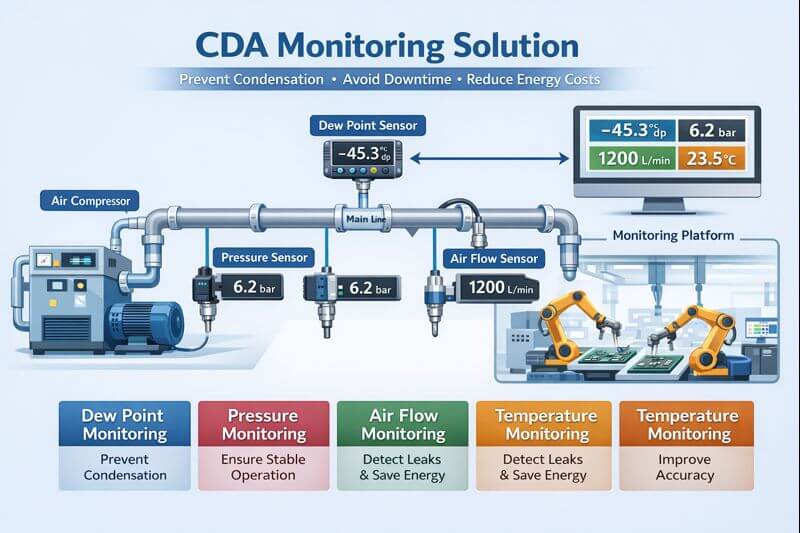
Moisture is one of the biggest threats in a CDA system. Even a small amount can cause corrosion, product defects, or process failure. Dew point sensors continuously monitor the dryness of compressed air, ensuring it remains within strict limits and preventing costly contamination.
2. Pressure Sensors – Ensuring System Stability
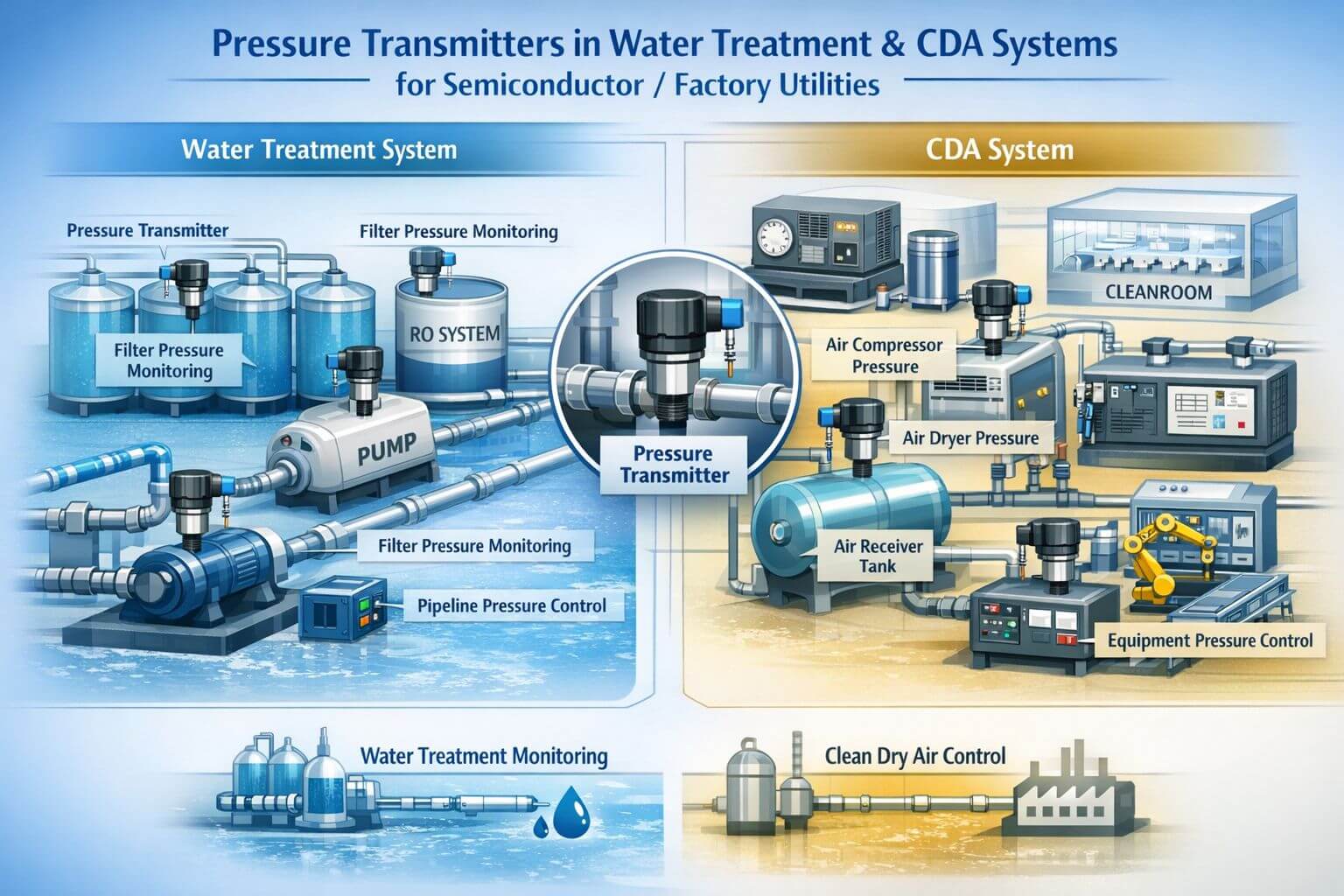
Stable pressure is essential for consistent operation. Pressure sensors help maintain optimal airflow, detect leaks, and prevent system overload. Without proper pressure monitoring, equipment performance can fluctuate, leading to inefficiencies or downtime.
3. Temperature Sensors – Maintaining Process Integrity
Temperature changes can affect air density and system performance. By monitoring temperature, operators can ensure that the CDA system operates within safe and efficient conditions, avoiding overheating or condensation risks.
4. Air Velocity / Flow Sensors – Optimizing Efficiency
Airflow sensors measure the speed and volume of air within the system. This data helps optimize energy usage, detect blockages, and ensure that the right amount of air is delivered where needed — no more, no less.
Conclusion
In a CDA system, sensors are not optional — they are essential. Dew point, pressure, temperature, and airflow sensors work together to ensure air quality, system reliability, and energy efficiency. Without them, maintaining a stable and contamination-free environment would be nearly impossible.