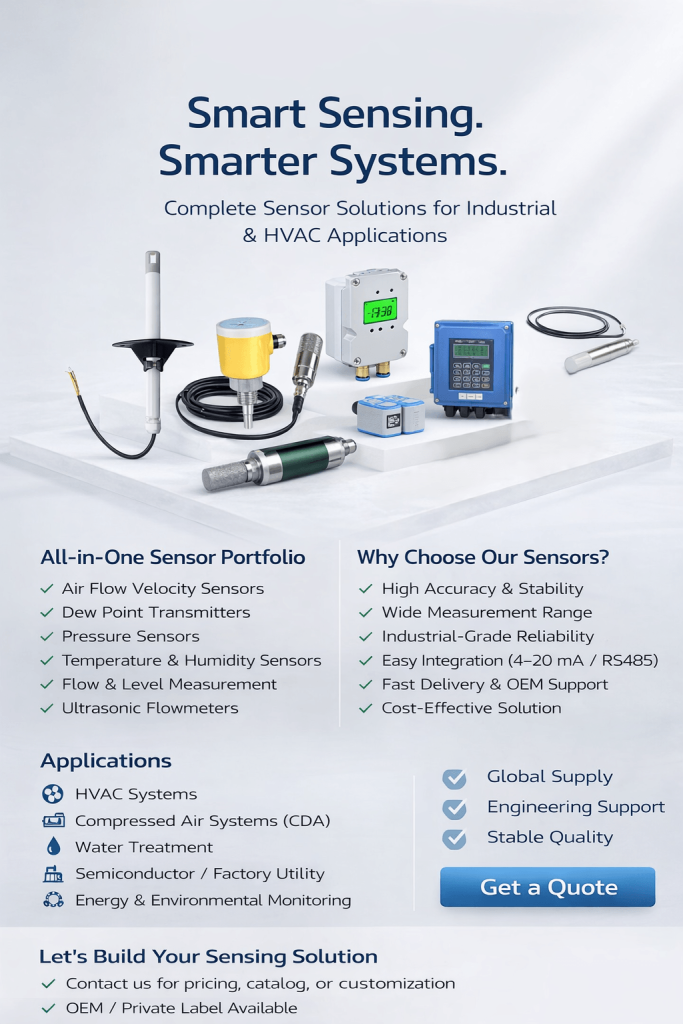
In today’s industrial and commercial environments, sensors play a critical role in making systems intelligent, efficient, and reliable. A sensor is a device that detects physical conditions—such as temperature, pressure, humidity, flow, or gas concentration—and converts them into data that systems can understand and act upon.
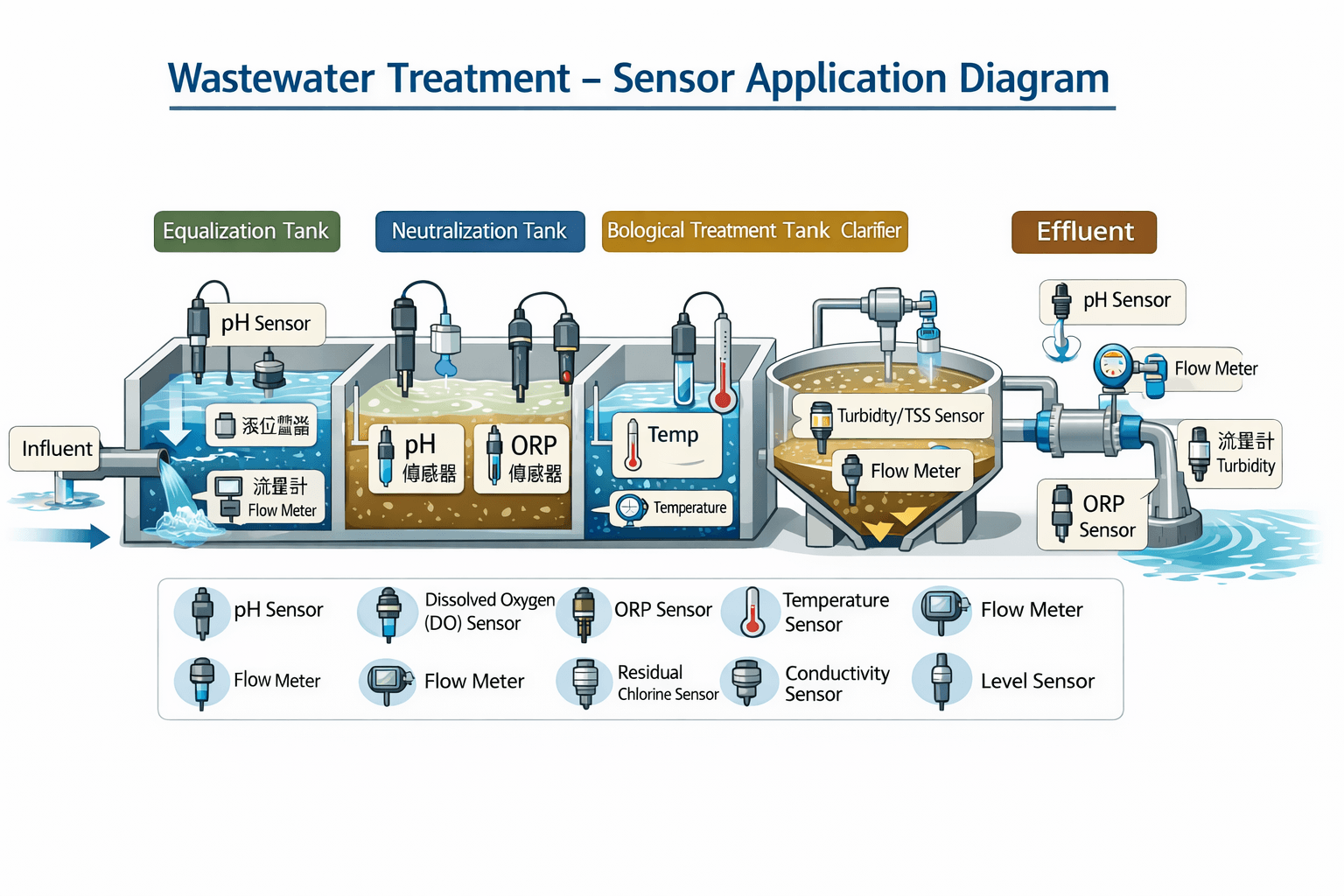
Without sensors, systems would operate blindly. For example, in HVAC systems, temperature and airflow sensors ensure comfort and energy efficiency. In compressed air systems, dew point sensors prevent moisture damage. In water treatment, level and flow sensors help maintain safe and stable operations.
Sensors are essential for three key reasons:
- Monitoring: They provide real-time data, allowing operators to understand what is happening inside a system.
- Control: Sensors enable automation by feeding data into control systems, ensuring optimal performance.
- Protection: They help prevent failures, reduce downtime, and avoid costly damage by detecting abnormal conditions early.
In short, sensors turn data into decisions. They are the foundation of automation, energy efficiency, and system safety—making them indispensable in modern industries.